
The Meaning of Another Turn
The Turn of the ScrewThis flow follows the idea that each new revelation intensifies the tale and complicates the reader’s interpretation of what the Governess has seen.
increasing Bearing strength in each event
 decreasing
Bearing strength in each eventdecreasingTwo Children Proposed
An Escalating Premise
A Familiar Ghost Story
The listeners have heard of an apparition affecting a child and the child’s mother.
A Further Turn
Douglas suggests that a haunting involving two children would turn the screw again.
The framing metaphor promises not merely more events but a more intense emotional and interpretive pressure.
The Position’s Hidden Cost
A Generous Offer with Limits
Attractive Terms
The Children’s Uncle offers a salary and a grand household to an inexperienced governess.
Isolation as a Condition
He forbids her from troubling him, making the apparent opportunity more restrictive than it first appears.
The story’s pressure begins in social arrangements before any apparition appears.
The Second Apparition
Repetition Changes Meaning
A Familiar Stranger
The Governess sees the same man through the dining-room window and recognizes him from the earlier encounter.
A Name Supplied
Mrs. Grose identifies him as Peter Quint, converting a puzzling sight into a possible return of the dead.
Each additional detail increases the appearance of coherence while also deepening the dependence on interpretation.
The Children Become Evidence
A New Reading of Innocence
Changed Interpretations
The children’s beauty, play, and affection begin to look to the Governess like signs of concealment.
Escalating Stakes
She decides the apparitions seek to destroy them and that she must prevent the result.
The turn of the screw now operates through growing certainty as much as through new supernatural appearances.
The Final Turn
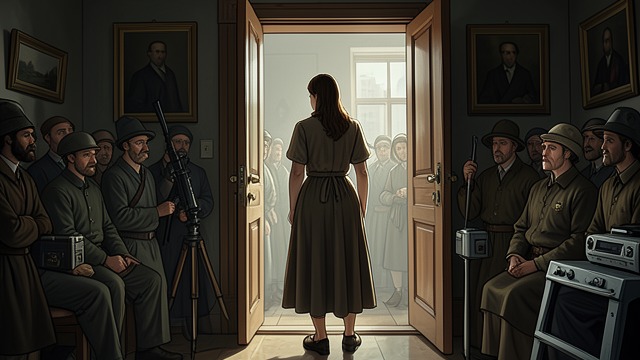
A Resolution That Tightens the Mystery
The Last Recognition
Miles names Peter Quint when the Governess points toward the window.
The Irreversible Consequence
The boy then sees no one and dies in her arms.
The climax closes the action but tightens the interpretive dilemma: a moment that looks like proof also coincides with the most terrible failure of protection.
At the Christmas Eve gathering
Before the Governess arrives at Bly
After the Governess has seen Quint at the tower
During the autumn household silence
At the end of the narrative
